

US scientists put highly robust nanostitched composites to the test
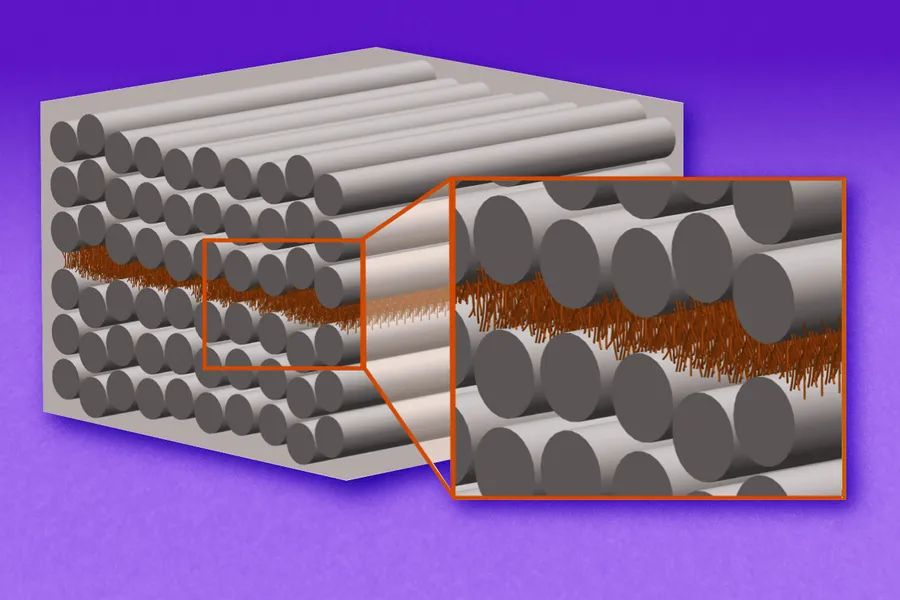
MIT engineers have developed a technique called nanostitching that uses carbon nanotubes to prevent cracking in multilayered composite materials which could be used to make lighter and tougher airplabes and spacecraft.
Engineers are using advanced composites made from high-performance fibers embedded in polymer sheet to build lightweight, durable aircraft structures. However, composites have a vulnerability – the space between layers filled with polymer ‘glue’. Upon impact, cracks can easily spread between layers, weakening the material even without visible exterior damage.
A team of researchers at MIT has demonstrated nanostitching, where microscopic forests of chemically grown carbon nanotubes are deposited between composite layers. The tiny, densely packed fibers grip and hold the layers together like ultrastrong Velcro, preventing them from peeling or shearing apart.
In recent tests with an advanced thin-ply carbon fiber laminate composite, layers bonded with nanostitching improved the material’s resistance to cracks by up to 60% compared to those with conventional polymers.
Source: Aerospace Testing International